
January 15, 2026
12 min read
After fifteen years building businesses, I noticed something strange: most companies operate at roughly 30% of their theoretical capacity. Not because of lack of effort—because of coordination overhead.
Every meeting, every email, every "quick sync" is friction. The larger you grow, the more energy goes into coordination rather than creation. This is the Utilization Gap—and it's why scaling feels like pushing a boulder uphill.
But what if organizations could coordinate without meetings? What if decisions happened automatically, based on clear rules and real-time data? What if the overhead of growth approached zero?
The Ferrari in First Gear
Imagine buying a Ferrari and only ever driving it in first gear. The engine screams, fuel consumption is terrible, and you're barely moving. That's most businesses today.
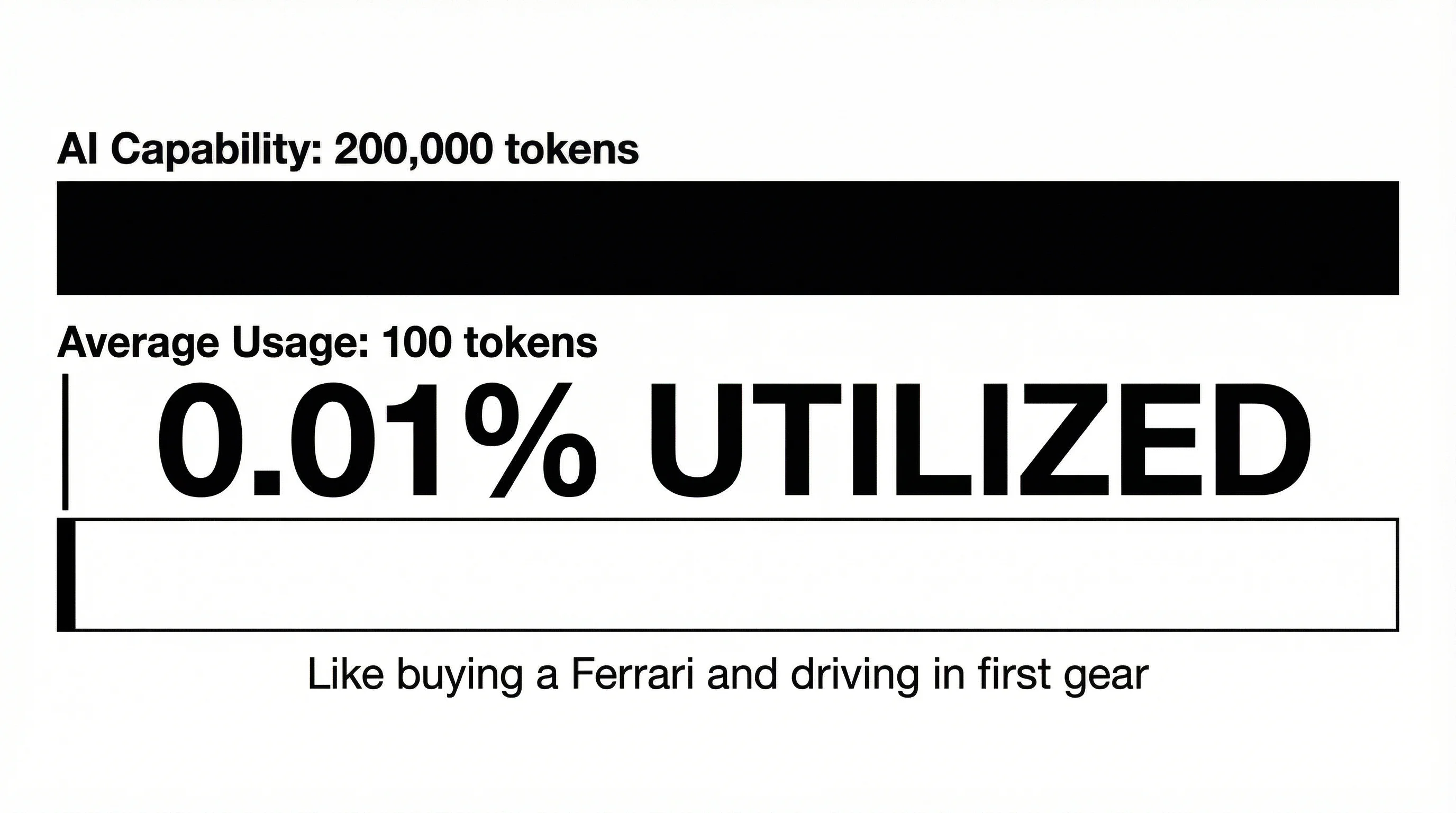
Large language models have massive context windows—200K+ tokens. But most applications use less than 0.01% of that capacity. Why? Because we're stuck in the old paradigm of single-agent, single-task interactions.
"The coordination tax grows exponentially. With 100 people, you have 4,950 possible communication pairs."
The Coordination Tax
As organizations grow, coordination overhead grows exponentially. With 10 people, you have 45 possible communication pairs. With 100 people, you have 4,950. With 1,000 people, you have 499,500.
Traditional solutions—org charts, processes, meetings—are attempts to reduce this complexity. But they're Band-Aids. They don't solve the fundamental problem: humans are terrible at coordination at scale.
The Missing Layer
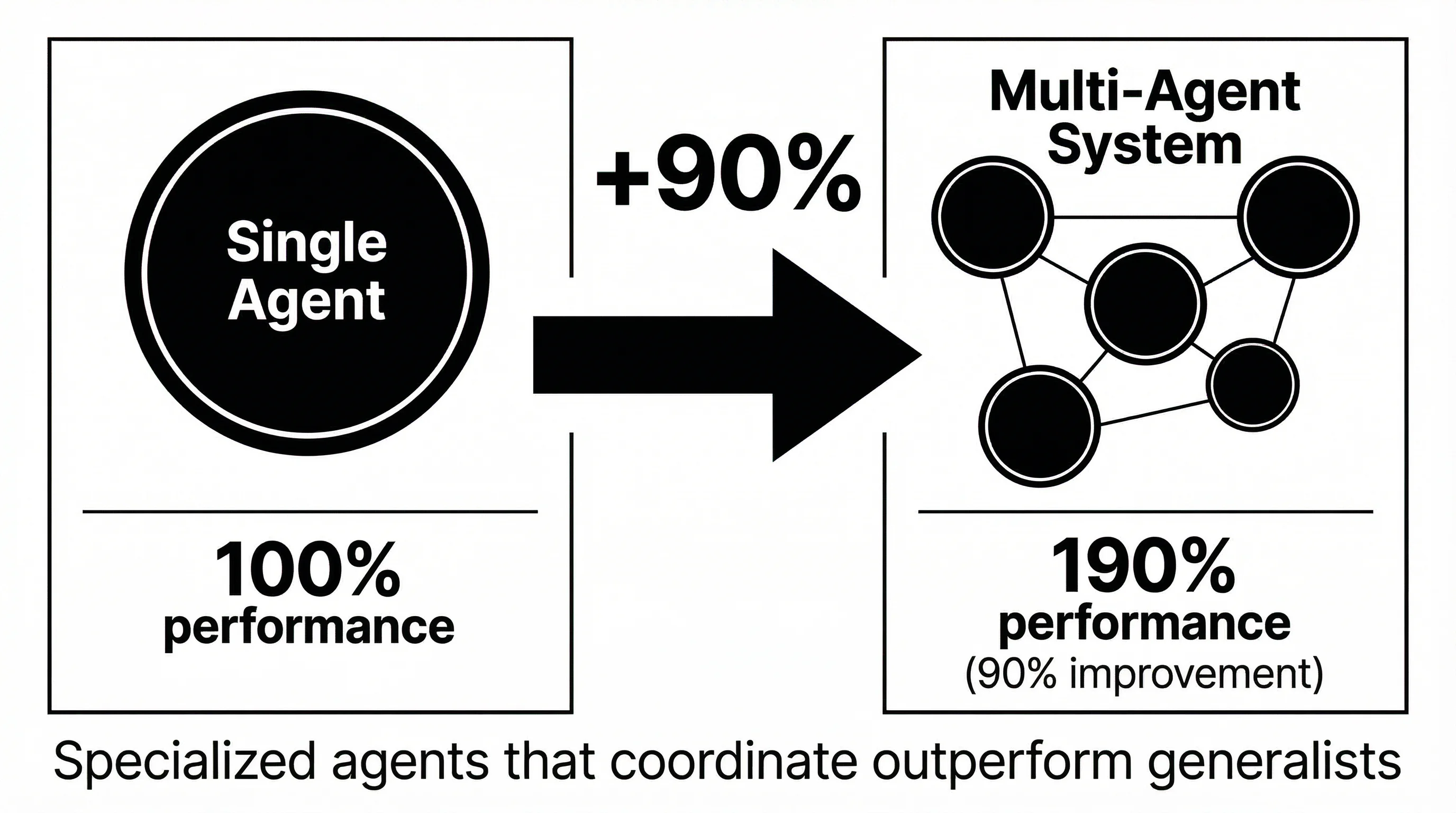
Between foundation models and business applications, there's a missing layer. A layer that handles:
- →Multi-agent coordination
- →Persistent memory across sessions
- →Organizational context and rules
- →Automatic decision-making
- →Real-time state management
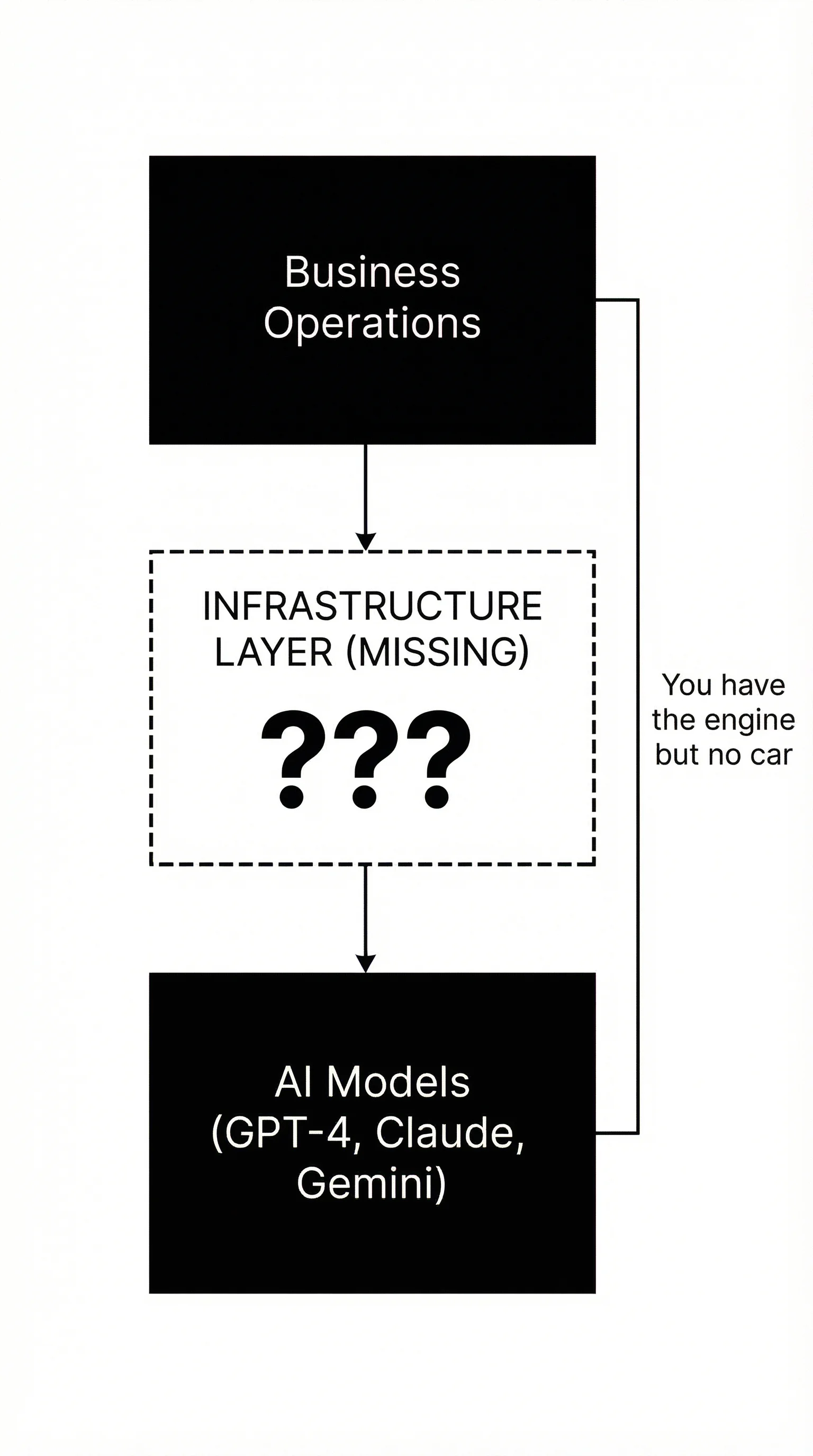
This is what ArmadaOS provides. An operating system for AI organizations. Not just better tools—a fundamentally different way of coordinating work.
What Changes
With proper infrastructure, utilization approaches 100%. Not because people work harder—because coordination overhead approaches zero.
Agents coordinate automatically. Decisions happen based on rules, not meetings. Memory persists across sessions. Context is shared, not repeated. Work happens in parallel, not serial.
"The Ferrari shifts into sixth gear. The engine purrs. You're finally moving at the speed you were designed for."
The Path Forward
This isn't theoretical. We're building it. ArmadaOS is the first operating system designed specifically for AI-native organizations.
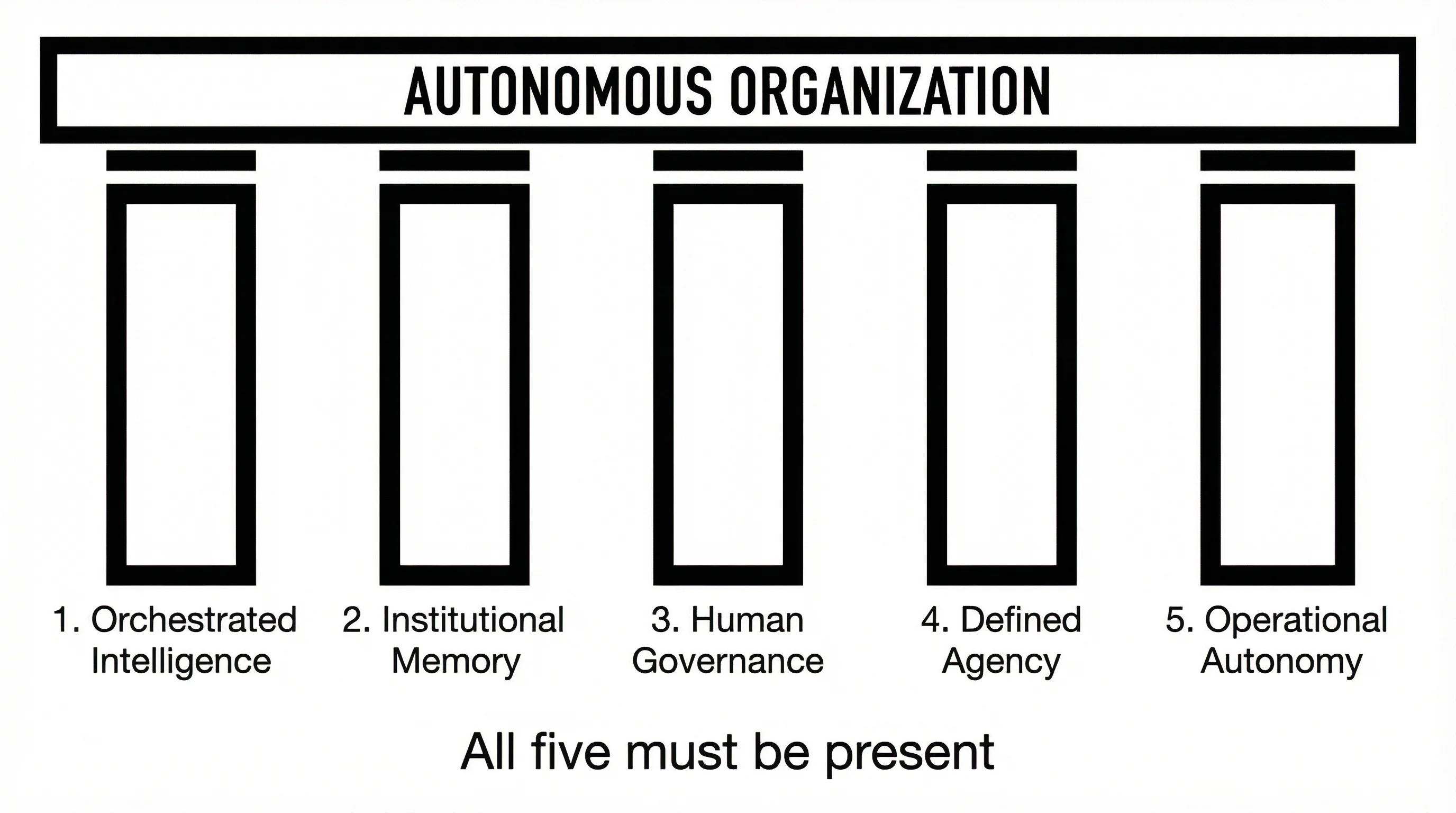
Five pillars: State, Memory, Protocols, Verification, and Execution. Each one solving a piece of the coordination problem. Together, they eliminate the Utilization Gap.
The question isn't whether this future arrives. It's whether you'll be ready when it does.