
January 23, 2026
10 min read
Everyone's shouting the same message. The same promises. The same positioning. So I did the opposite.
The AI agent market is crowded. Everyone's selling the same dream: "AI that does everything!" "Replace your entire team!" "10x your productivity!"
It's noise. And noise doesn't work.
So I'm not competing in that market. I'm creating a different one.
The Positioning Problem
When everyone's selling the same thing, positioning becomes impossible. You can't differentiate on features because everyone has the same features. You can't differentiate on price because someone will always undercut you. You can't differentiate on quality because everyone claims to be the best.
So you end up competing on volume. Louder marketing. More ads. Bigger claims. It's a race to the bottom.
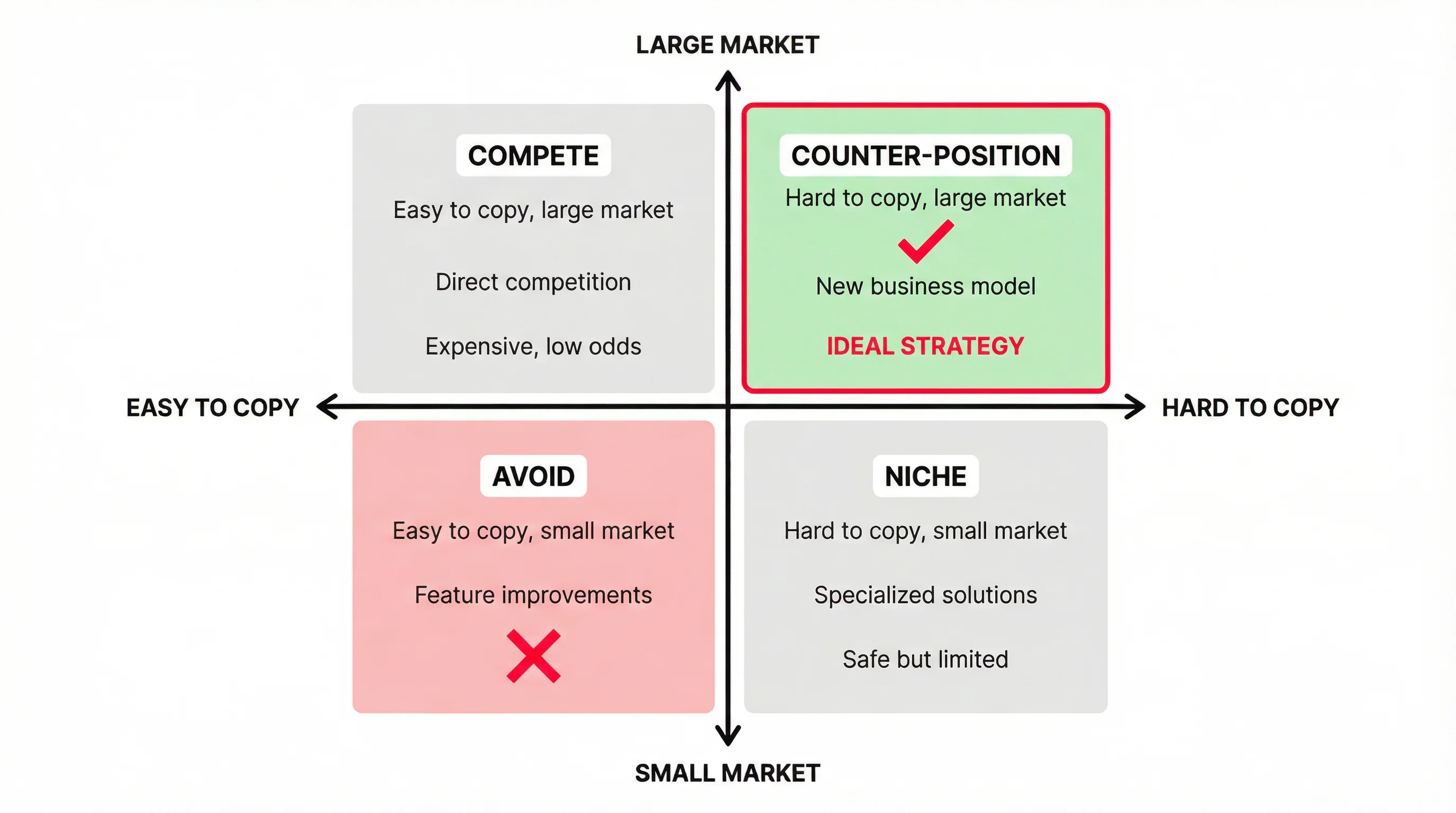
Unless you counter-position.
What is Counter-Positioning?
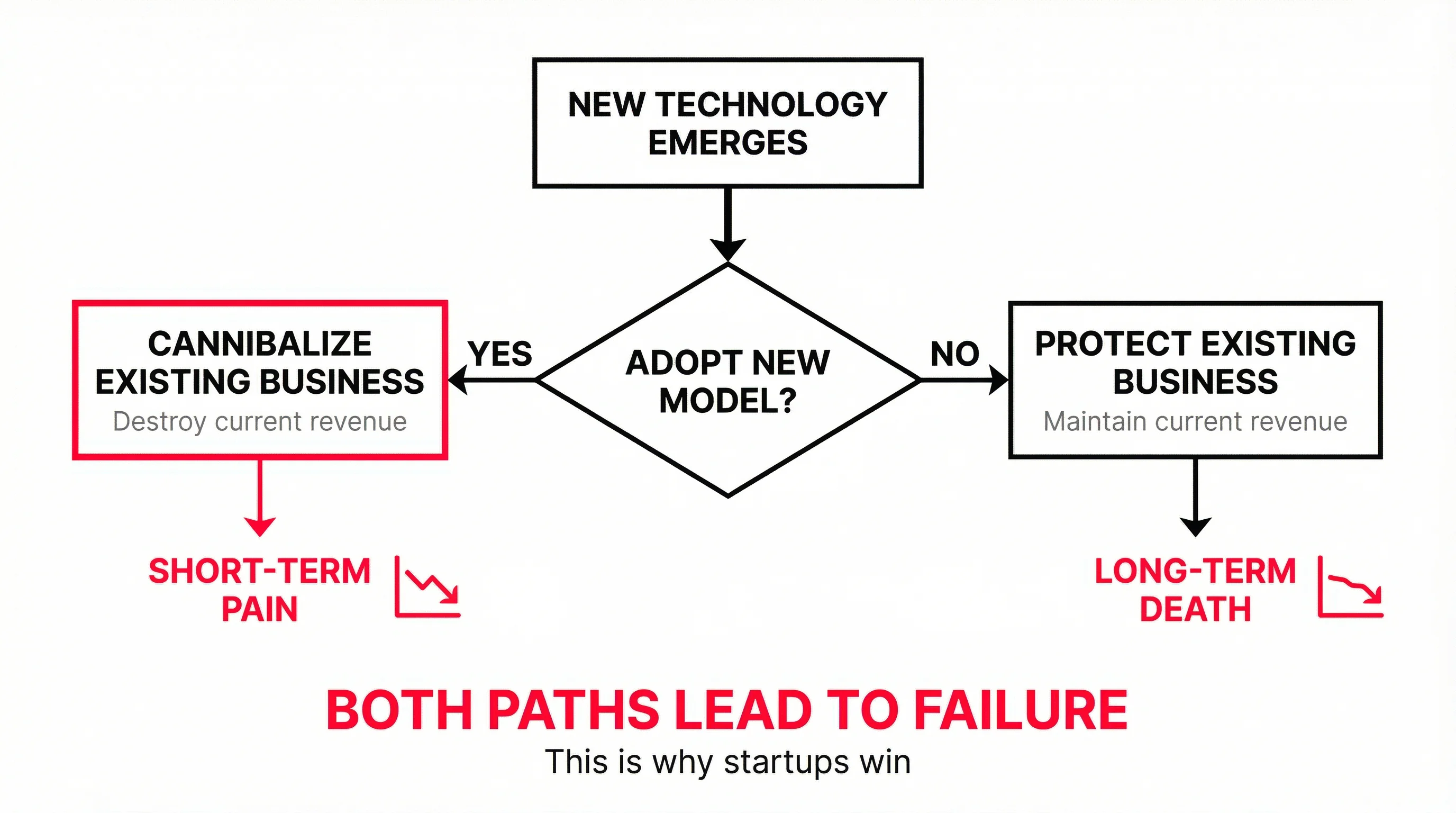
Counter-positioning is when you adopt a business model or strategy that your competitors can't copy without damaging their existing business.
- →Netflix counter-positioned against Blockbuster with streaming. Blockbuster couldn't copy it without cannibalizing their retail stores.
- →Tesla counter-positioned against traditional automakers with direct sales. Traditional dealers couldn't copy it without destroying their dealer network.
- →Vanguard counter-positioned against active fund managers with index funds. Active managers couldn't copy it without admitting their entire value proposition was wrong.
"Counter-positioning isn't just differentiation. It's creating a position your competitors can't occupy."
My Counter-Position
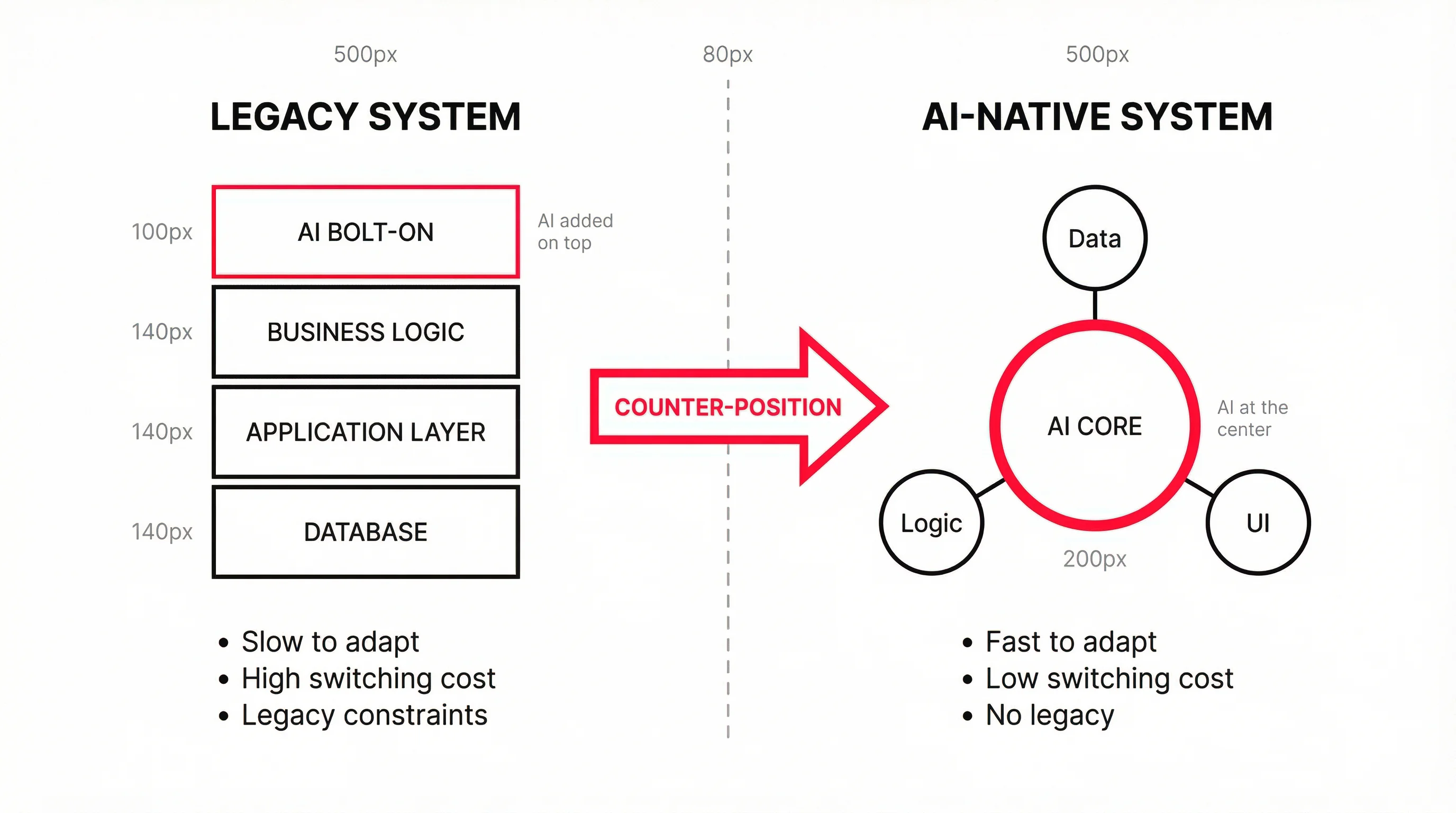
Everyone in AI is selling agents. I'm selling infrastructure.
Everyone's promising "no code required." I'm building for developers.
Everyone's claiming "works out of the box." I'm saying "requires systems thinking."
Everyone's targeting consumers. I'm targeting entrepreneurs who understand leverage.
This is counter-positioning. I'm not competing with the AI agent companies. I'm creating the layer they're missing. The infrastructure layer. The organizational operating system.
The Secret Resource Strategy
Most companies want to be discovered. They want to be everywhere. They want maximum visibility.
I'm doing the opposite. I want to be the secret resource people discover.
No big launch. No aggressive marketing. No "look at me" positioning. Just quiet excellence. Just results. Just the work.
"The people who need this will find it. The people who don't, won't. And that's perfect."
The Anti-Hype Positioning
The AI space is full of hype. Exaggerated claims. Impossible promises. Vaporware.
So I'm positioning against the hype. No big claims. No promises of magic. No "this changes everything" messaging.
Just: Here's what it does. Here's how it works. Here's what you need to make it work. Here are the results.
This is counter-positioning against the entire industry's marketing playbook. Everyone's selling dreams. I'm selling systems.
The Long-Term Play
Counter-positioning is a long-term strategy. It doesn't create fast growth. It doesn't generate viral buzz. It doesn't produce hockey-stick charts.
But it creates sustainable competitive advantage. Because you're not competing on the same dimensions as everyone else.
While everyone else is fighting for attention, you're building something they can't copy. While everyone else is optimizing for growth, you're optimizing for durability. While everyone else is chasing trends, you're creating a category.
This is the long game. And the long game is the only game worth playing.
The Risk
Counter-positioning is risky. You're betting against the consensus. You're saying everyone else is wrong. You're creating a position that might not have a market.
But here's the thing: If you're right, you win everything. If you're wrong, you fail fast and learn.
"I'd rather take the risk of being different than the certainty of being invisible."
Counter-positioning isn't for everyone. It's for people who see a different game. Who want to play by different rules. Who are willing to be misunderstood in the short term to be inevitable in the long term.