January 19, 2026
12 min read
Everyone says "build in public." Share your journey. Document everything. Be transparent. I did the opposite. Here's why.
The startup playbook says: Build in public. Tweet your progress. Share your metrics. Document your failures. Be transparent.
I built ArmadaOS in secret for two years. No tweets. No blog posts. No updates. Just building.
Now I'm sharing. But only after it works.
The Build in Public Movement
Building in public is popular. And for good reason. It creates accountability. It attracts early adopters. It builds an audience. It generates feedback.
But it has costs. Costs most people don't talk about.
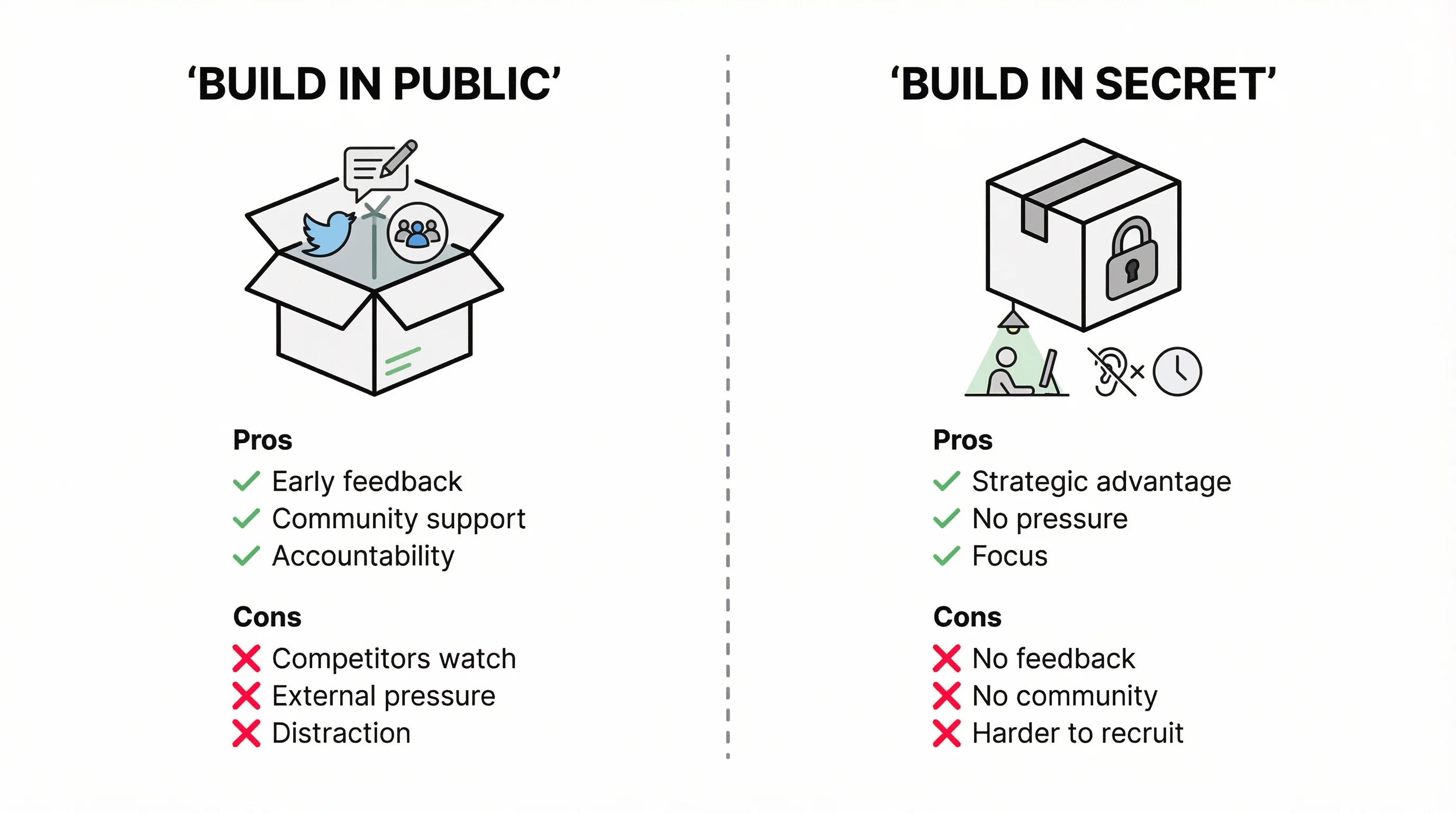
- →Cost 1: Premature feedback. When you share early, you get feedback from people who don't understand your vision.
- →Cost 2: Competitive exposure. When you build in public, your competitors see everything.
- →Cost 3: Performance pressure. When you commit to public updates, you optimize for updates, not progress.
- →Cost 4: Identity lock-in. When you build in public, you commit to a direction publicly. Changing course feels like failure.
These costs are real. And for some projects, they outweigh the benefits.
Why I Built in Secret
I built ArmadaOS in secret because:
1. I needed clarity, not feedback. I knew what I was building. I didn't need validation. I didn't need suggestions. I needed focus. Public feedback would have been noise.
2. I wanted to move fast. Building in secret meant no updates. No documentation. No explaining. Just building. I could change direction instantly without explaining why.
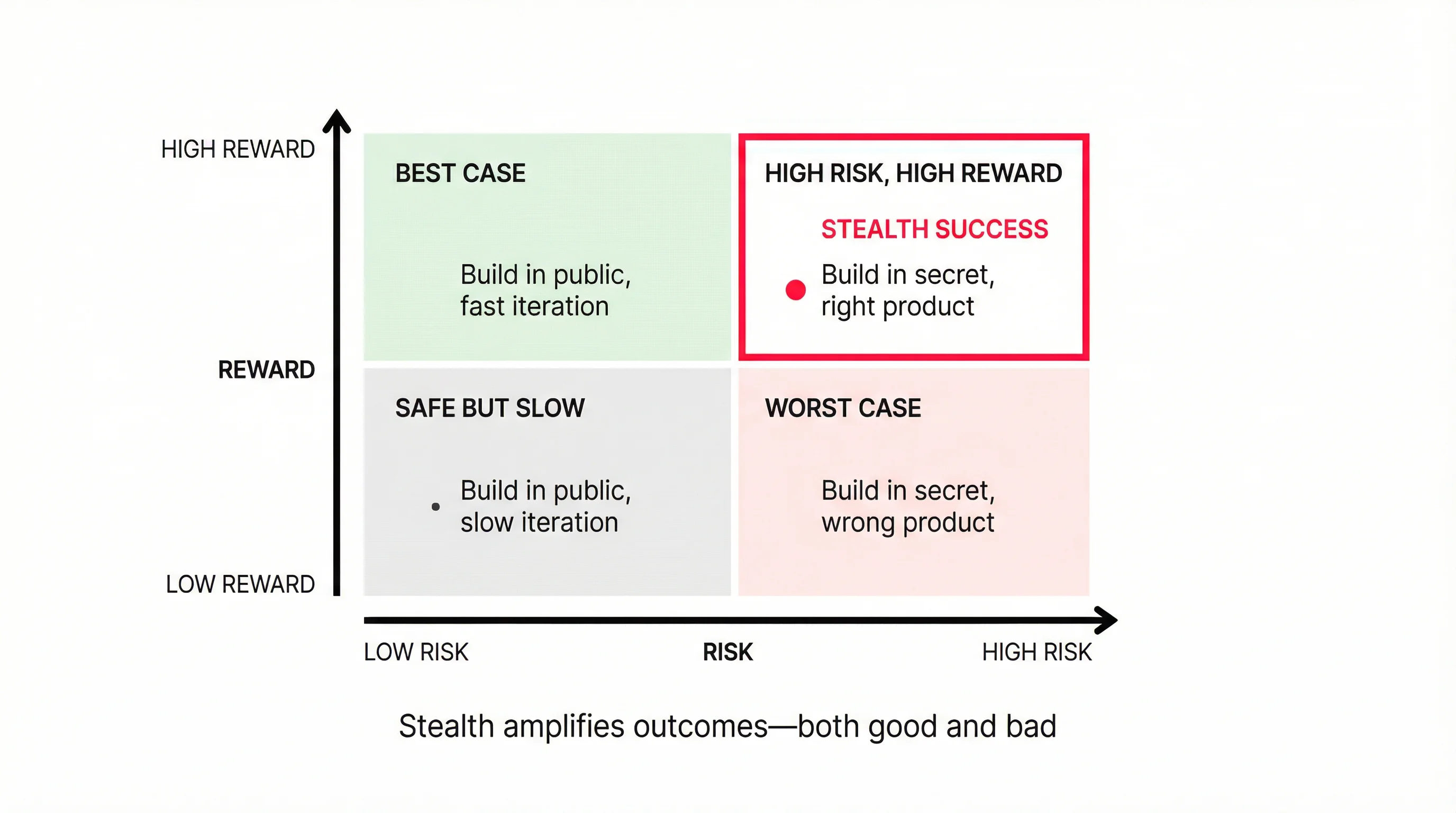
3. I wanted competitive advantage. The AI agent space is crowded. If I built in public, competitors would copy the good ideas and avoid my mistakes. Building in secret gave me a head start.
4. I wanted to launch with proof. I didn't want to promise. I wanted to deliver. I didn't want to say "this will work." I wanted to say "this works. Here's proof."
"I didn't want to promise. I wanted to deliver."
The Stealth Advantage
Stealth mode has a bad reputation. People associate it with vaporware. With secrecy for the sake of secrecy. With fear of feedback.
But stealth has real advantages:
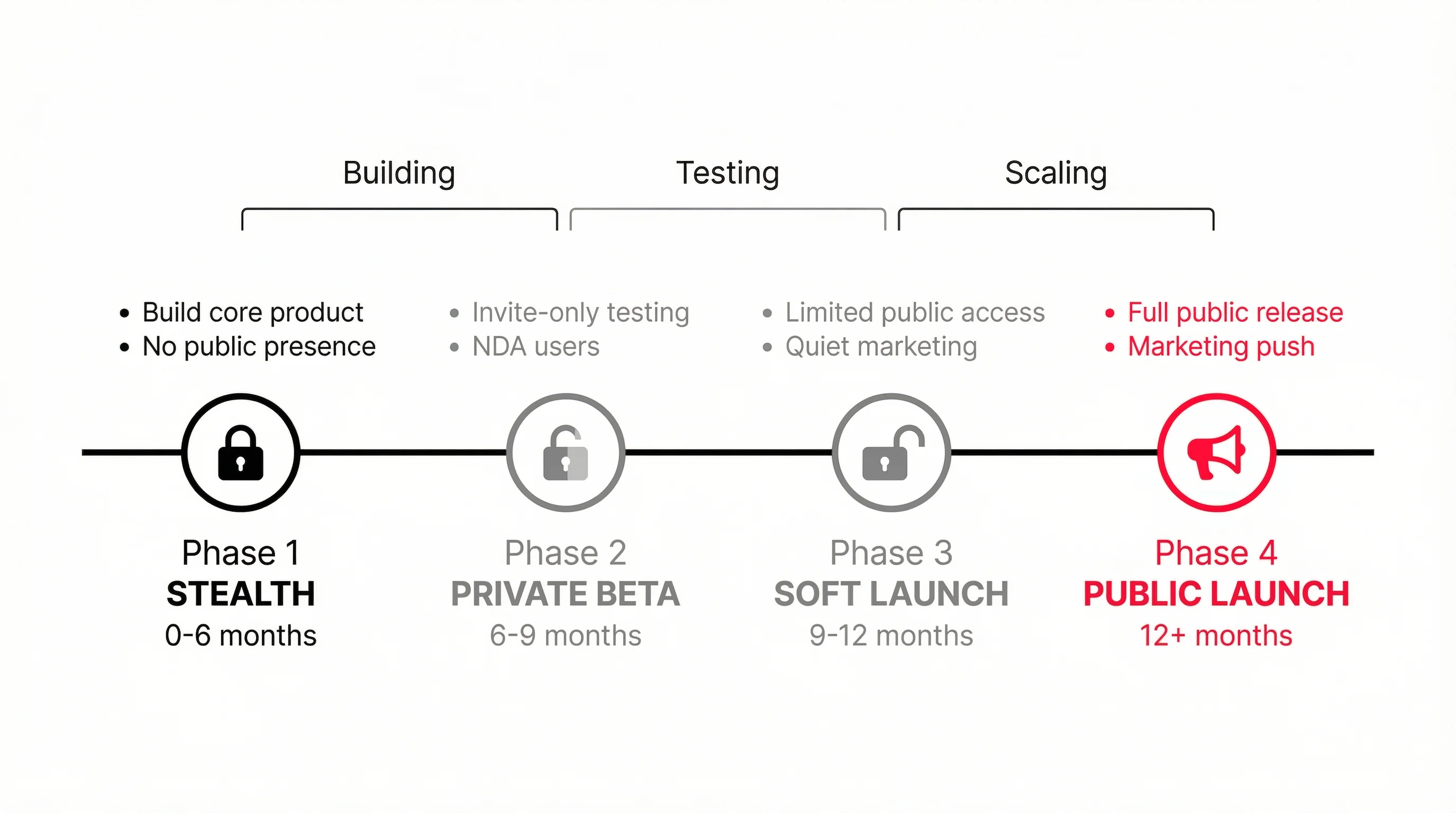
- →Freedom to pivot. When no one knows what you're building, you can change direction without explanation.
- →Focus on building. When you're not documenting, you're building. When you're not explaining, you're executing.
- →Competitive protection. Your competitors don't know what you're building. They can't copy your strategy.
- →Launch with impact. When you build in secret and launch with proof, you create impact.
The Hybrid Approach
You don't have to choose. You can do both.
Build in secret until you have proof. Then build in public.
This is what I'm doing. I built ArmadaOS in secret for two years. Now I'm sharing. But I'm sharing results, not promises. I'm sharing systems, not theories. I'm sharing what works, not what might work.
"Build in public. Build in secret. Build hybrid. Just build. The method doesn't matter. The outcome does."
What I Learned
Building in secret taught me:
- →Clarity beats feedback. If you know what you're building, external input is noise. Trust your vision.
- →Speed beats perfection. Building in secret let me move fast. No documentation. No explanation. Just execution.
- →Proof beats promises. Launching with working systems beats launching with ideas. Results beat hype.
- →Stealth is underrated. Everyone says build in public. But building in secret has real advantages.
I don't regret building in secret. It was the right choice for this project. And now I'm sharing. But on my terms. With proof. With results. With systems that work.