
Context windows are short-term memory. Agentic memory is long-term intelligence that compounds over time.
The Memory Problem
Current AI agents have amnesia. Every conversation starts from zero. Every task begins with no context. Every session forgets what came before.
This is because agents rely on context windows - short-term memory that disappears when the session ends. It's like having an employee who forgets everything overnight.
The paper "Agentic Memory: Unified Long-Term and Short-Term Memory" solves this by giving agents persistent memory that survives across sessions.
STM vs LTM: The Two Memory Systems
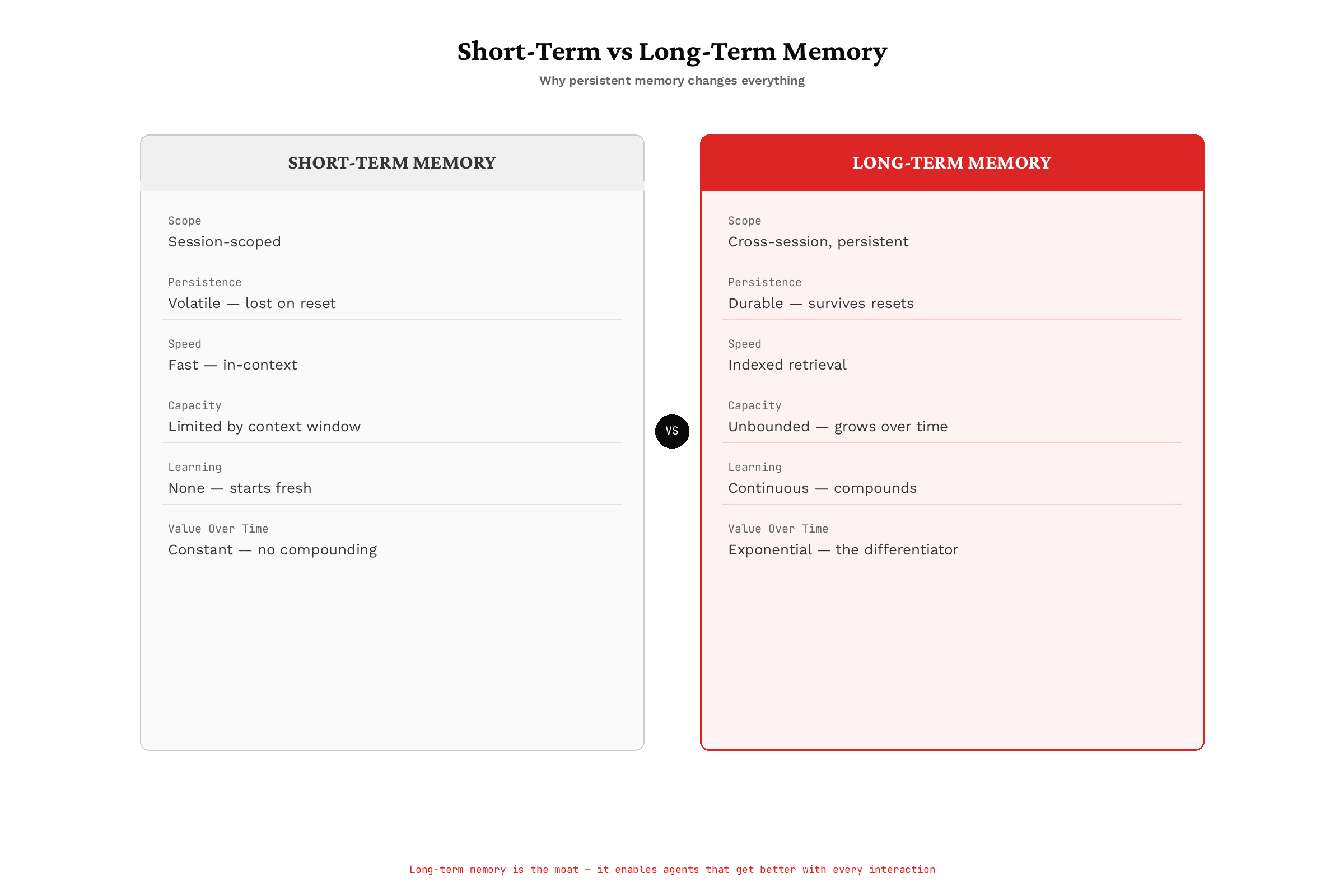
Short-Term Memory (STM)
This is the context window. What the agent can "see" right now.
- **Capacity:** Limited (4K-200K tokens)
- **Duration:** Single session only
- **Speed:** Instant access
- **Use case:** Current conversation, active task
STM is what you have now. It's necessary but not sufficient.
Long-Term Memory (LTM)
This is persistent storage. What the agent remembers forever.
- **Capacity:** Unlimited (database-backed)
- **Duration:** Permanent
- **Speed:** Retrieval required (milliseconds)
- **Use case:** Past conversations, learned patterns, user preferences
LTM is what enables compounding intelligence. This is the breakthrough.
The key insight: You need both. STM for current context, LTM for accumulated knowledge. The paper shows how to unify them.
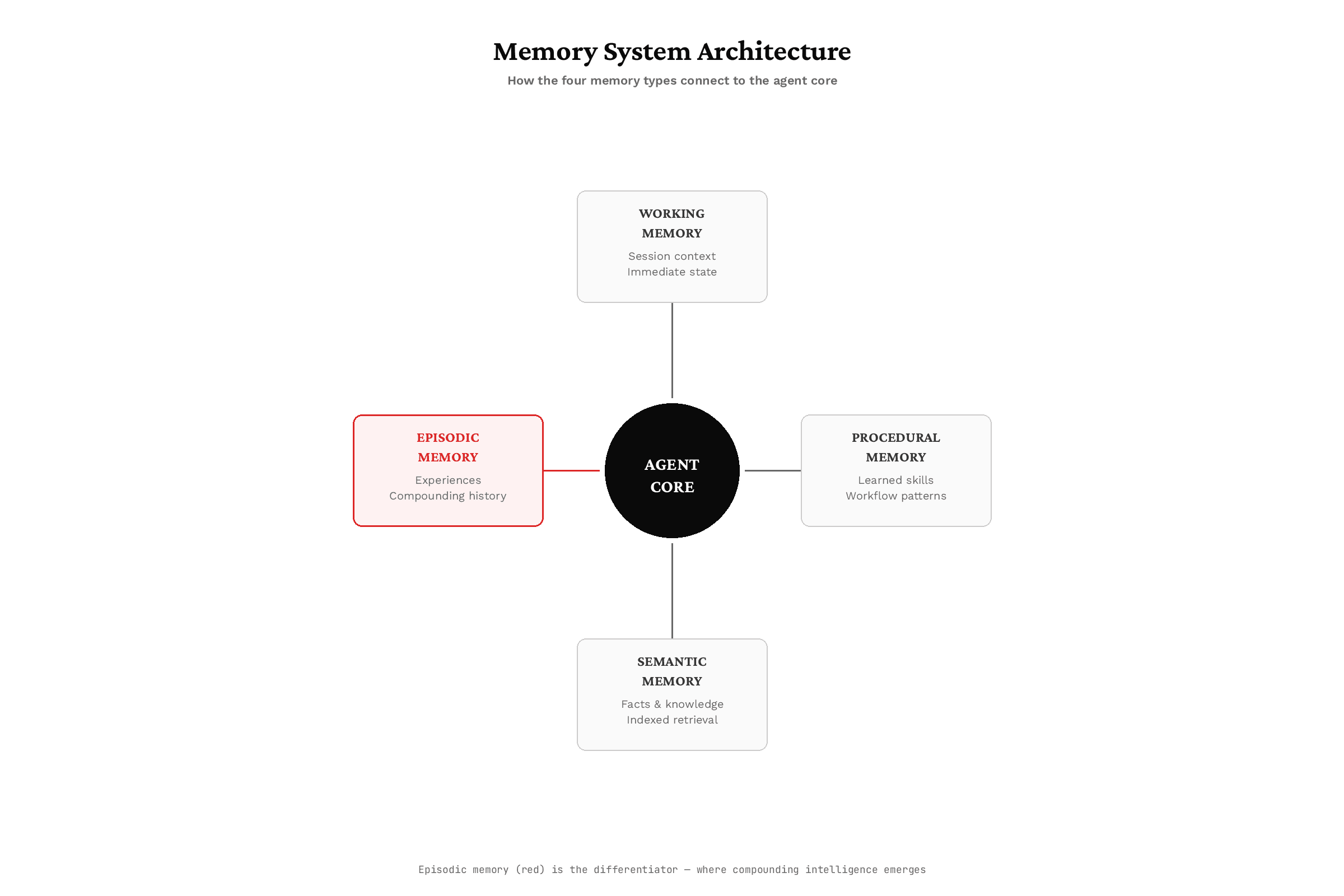
The Four Layers of Agentic Memory
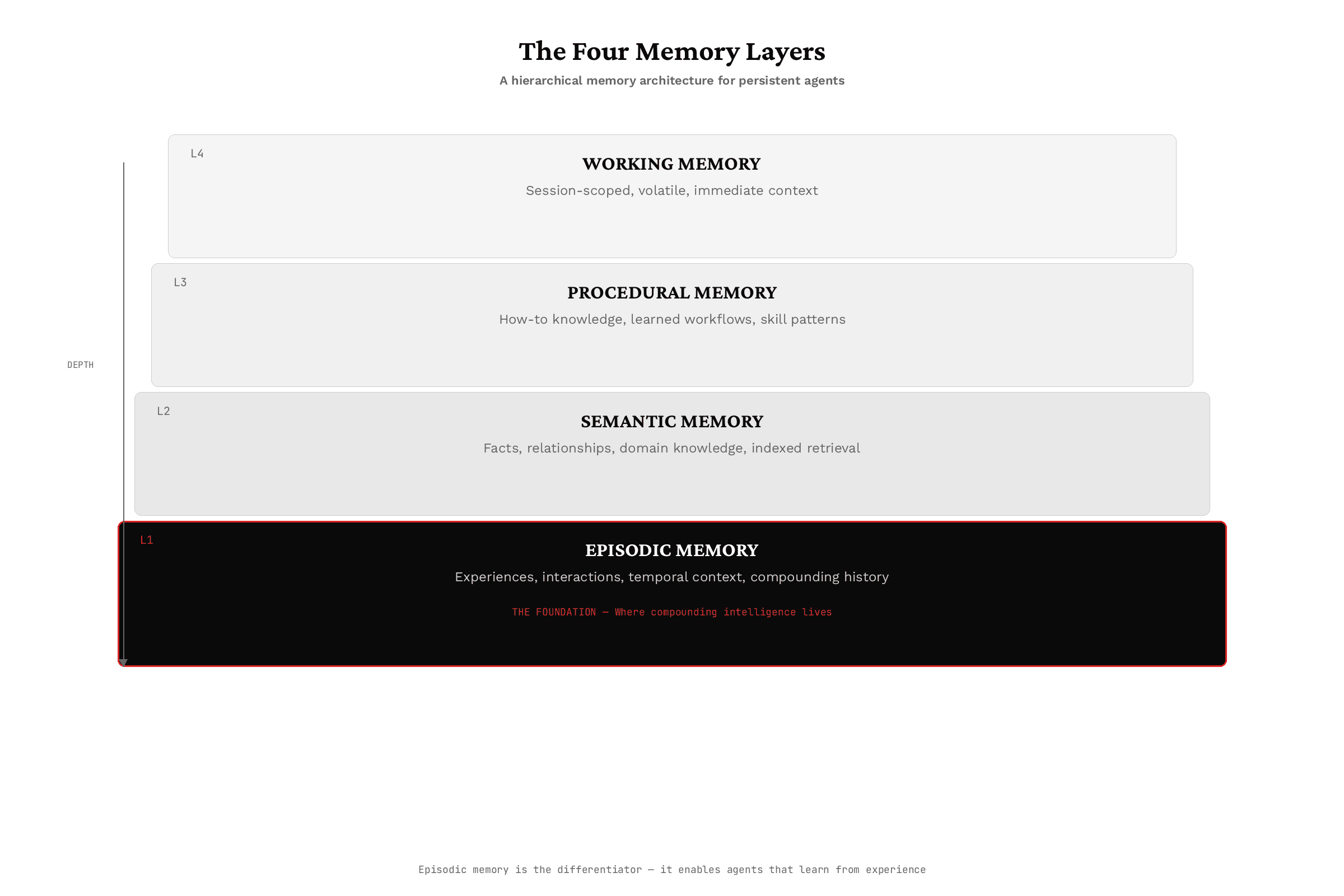
Layer 1: Episodic Memory
Stores specific events and conversations.
Example: "On Jan 15, the user asked about delegation frameworks. I provided the 5-level model."
Layer 2: Semantic Memory
Stores facts and knowledge extracted from episodes.
Example: "User prefers hierarchical delegation models. User's company has 50 employees."
Layer 3: Procedural Memory
Stores learned behaviors and patterns.
Example: "When user asks for frameworks, provide visual diagrams first, then detailed text."
Layer 4: Working Memory
Combines STM with relevant LTM for current task.
Example: "Current task: delegation advice. Relevant past: user's org structure, previous questions, preferred format."
How Oracle Uses Agentic Memory
Oracle, ArmadaOS's learning agent, is built on agentic memory. Here's how it works:
Continuous Recording
Every interaction is stored in episodic memory. Nothing is forgotten.
Knowledge Extraction
Oracle extracts patterns and facts from episodes, building semantic memory.
Behavioral Learning
Oracle learns what works and what doesn't, updating procedural memory.
Context Assembly
For each new task, Oracle retrieves relevant memories and combines them with current context.
The result: Oracle gets smarter every day. It learns your preferences, your patterns, your organization. Intelligence that compounds.
The Compounding Effect
Without memory, agents start from zero every time. With memory, they compound.
Day 1
Agent learns your communication style, your preferences, your org structure.
Day 30
Agent knows what you need before you ask. Suggests solutions based on past patterns.
Day 365
Agent is an expert on your business. Makes connections you wouldn't see. Predicts problems before they happen.
This is the difference between a tool and a teammate. Memory enables the latter.
Frequently Asked Questions
How do AI agents remember past conversations?
Through long-term memory systems that store conversations in a database. When you start a new session, the agent retrieves relevant past interactions and loads them into working memory alongside the current context.
Is my data private if agents have memory?
Yes. Agentic memory is stored in your own infrastructure, not shared across users. Your agent's memory is yours alone. You can delete it at any time.
How much memory can an agent store?
Effectively unlimited. Long-term memory is database-backed, so capacity scales with storage. The challenge isn't capacity—it's retrieval. You need efficient search to find relevant memories quickly.
Can agents forget things?
Yes, and they should. Not all memories are equally important. The system implements memory decay—older, less-accessed memories fade over time. You can also manually delete memories.
How fast is memory retrieval?
Milliseconds. The system uses vector embeddings and semantic search to find relevant memories instantly. Fast enough that users don't notice the retrieval happening.
Do I need to build memory systems from scratch?
No. ArmadaOS provides agentic memory out of the box. Every agent automatically gets episodic, semantic, and procedural memory. You just use it—no infrastructure work required.
Building Your Own Memory System
If you're implementing agentic memory from scratch:
Choose Your Storage
Vector database (Pinecone, Weaviate) for semantic search. SQL database for structured data. Both for best results.
Define Memory Schema
What gets stored? Episodes (raw conversations), facts (extracted knowledge), patterns (learned behaviors). Design your schema carefully.
Implement Retrieval
Semantic search for relevant memories. Recency weighting for recent context. Importance scoring for critical information.
Add Knowledge Extraction
Use an LLM to extract facts and patterns from episodes. This builds semantic and procedural memory automatically.
Implement Memory Decay
Old, unused memories should fade. Implement decay based on age and access frequency. Keep the memory system clean.
Source Research
This analysis is based on the paper "Agentic Memory: Unified Long-Term and Short-Term Memory" published on arXiv.
Read Full Paper →