Single AI agents are impressive. Multi-agent systems are transformative. But without orchestration, they're just expensive chaos.
The Problem
Most companies are stuck at the single-agent level. One AI assistant. One chatbot. One automation. This is like having one employee for your entire company.
The real power comes from **multi-agent systems**: dozens of specialized agents working together. But coordination becomes the bottleneck. Without proper orchestration, you get:
- Agents duplicating work
- Conflicting decisions
- Resource contention
- No visibility into what's happening
- Impossible to debug when things break
The Solution: Orchestration Protocols
The research paper "The Orchestration of Multi-Agent Systems" introduces two critical protocols:
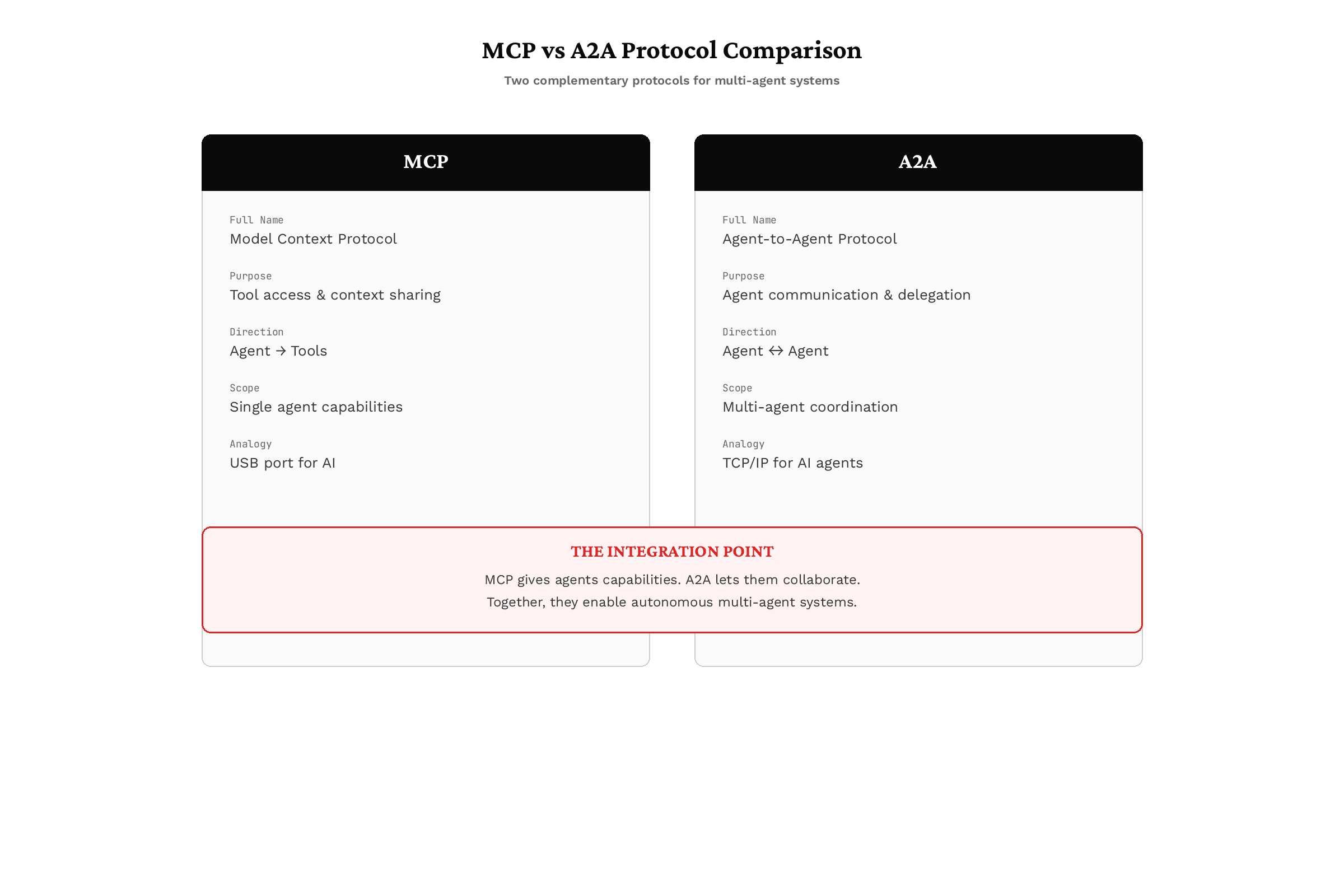
1. MCP (Model Context Protocol)
Think of MCP as the **operating system** for AI agents. It provides:
- Standardized communication between agents
- Context sharing across the system
- Resource management and allocation
- State synchronization
2. A2A (Agent-to-Agent Protocol)
A2A is the **language** agents use to talk to each other. It defines:
- Message formats and contracts
- Handoff procedures between agents
- Error handling and recovery
- Coordination patterns
Why This Matters for ArmadaOS
ArmadaOS is built on these exact principles. We use MCP for system-level orchestration and are implementing A2A for agent coordination.
This means:
- **Agents know what other agents are doing** - No duplicate work
- **Seamless handoffs** - One agent can delegate to another without breaking context
- **Centralized visibility** - You can see the entire system state at any time
- **Fault tolerance** - If one agent fails, others can recover
- **Scalability** - Add new agents without rewriting the system
The Enterprise Pattern
The paper identifies three orchestration patterns for enterprise deployment:
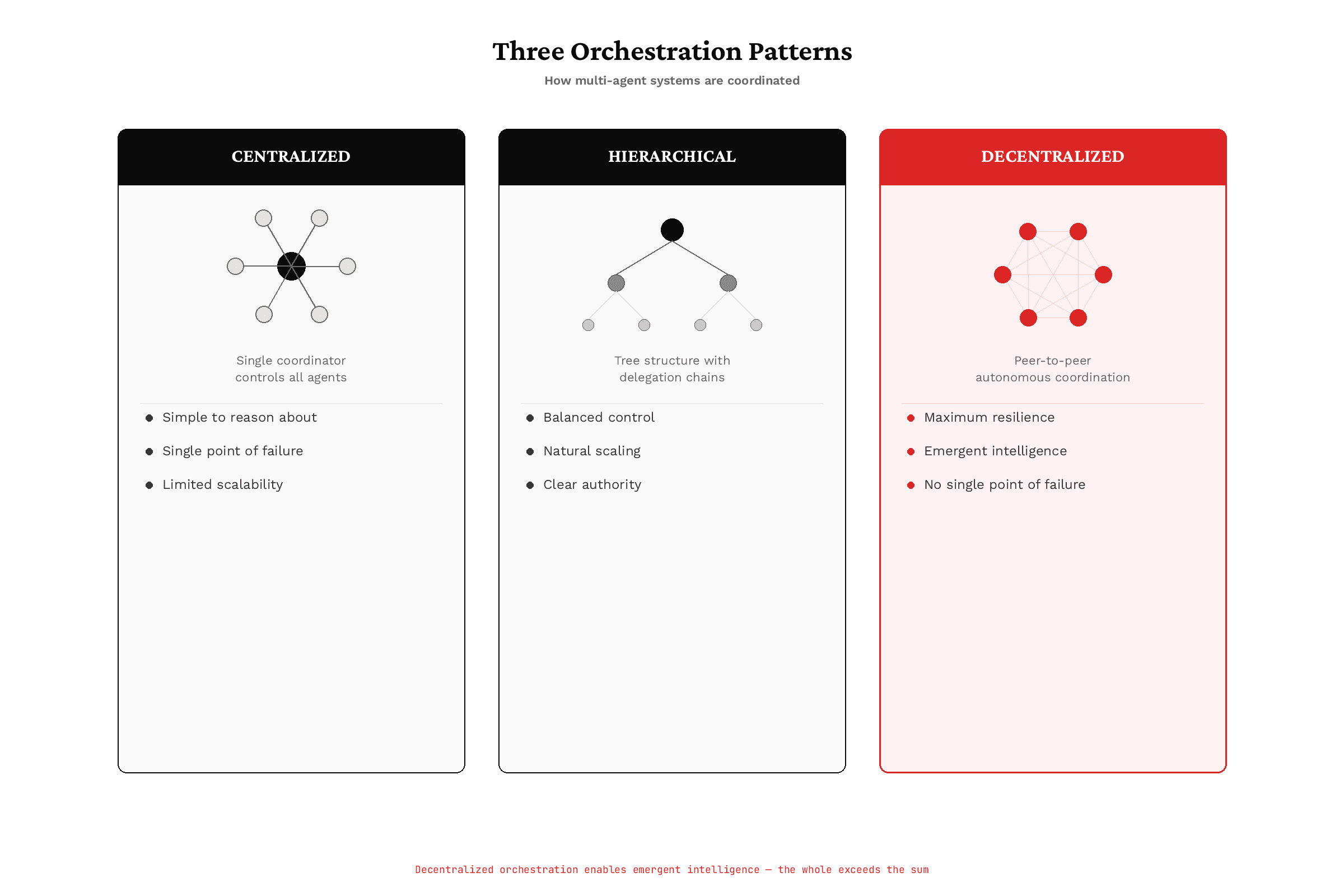
Centralized Orchestration
One conductor agent manages all others. Simple but creates a bottleneck. Good for <10 agents.
Hierarchical Orchestration
Teams of agents with team leaders. Scales better. Good for 10-100 agents. **This is what ArmadaOS uses.**
Decentralized Orchestration
Agents self-organize using contracts. Most scalable but hardest to implement. Good for 100+ agents.
Frequently Asked Questions
What's the difference between MCP and A2A?
MCP is the infrastructure layer (like an operating system). A2A is the communication protocol (like HTTP for the web). You need both for a functioning multi-agent system.
Can I use this with existing AI agents?
Yes. MCP and A2A are designed to wrap existing agents. You don't need to rebuild your agents from scratch - just add the orchestration layer on top.
How many agents can one system handle?
With proper orchestration, hundreds. The paper documents systems with 200+ agents running in production. The key is choosing the right orchestration pattern for your scale.
What happens when agents disagree?
The orchestration layer handles conflict resolution through predefined contracts. Agents declare their capabilities and constraints upfront, and the orchestrator ensures compatible agents work together.
Is this only for technical teams?
No. The orchestration layer abstracts the complexity. Non-technical teams can deploy and manage multi-agent systems through configuration, not code. This is the core vision of ArmadaOS.
How to Implement This
If you're building a multi-agent system, here's the practical path:
Start with MCP
Implement the Model Context Protocol as your foundation. This gives you centralized state management and resource allocation.
Define Agent Contracts
Document what each agent does, what resources it needs, and how it communicates. This prevents chaos as you scale.
Implement A2A
Add the Agent-to-Agent protocol for direct communication. Start simple with request/response patterns, then add pub/sub as needed.
Choose Your Pattern
Pick centralized, hierarchical, or decentralized based on your scale. Start centralized, move to hierarchical as you grow.
Add Observability
You can't manage what you can't see. Build dashboards that show agent status, resource usage, and system health.
Source Research
This analysis is based on the paper "The Orchestration of Multi-Agent Systems" published on arXiv.
Read Full Paper →