

January 24, 2026
8 min read
Money can be earned. Reputation can be rebuilt. Skills can be learned. Relationships can be repaired. But time? Time only moves in one direction.
I used to think money was the scarcest resource. Then I made money and realized I was wrong. I used to think energy was the scarcest resource. Then I optimized my health and realized I was wrong.
Time is the only truly non-renewable resource. Every other constraint can be worked around. Time cannot.
The Time Illusion
We treat time like it's infinite. We say "I don't have time" when we mean "I'm not prioritizing this." We say "maybe later" when we mean "probably never." We defer, delay, and procrastinate as if there's an unlimited supply.
There isn't. Every day you spend is a day you can't get back. Every hour wasted is an hour gone forever. Every "later" is a bet that later will come.
"You don't 'have' time. You spend it. And you can't earn more."
The Time-Money Trade
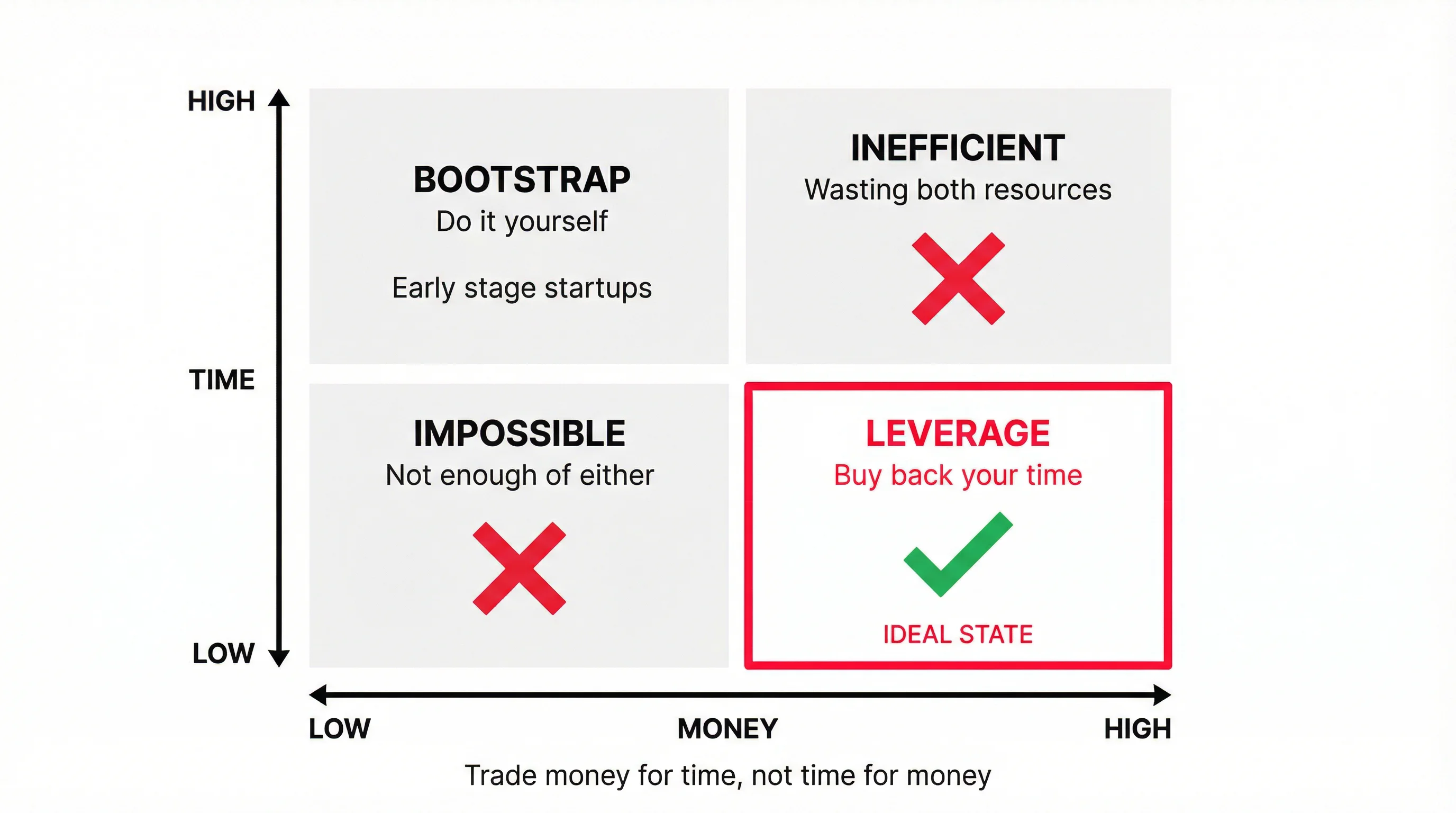
Most people trade time for money. They work jobs that exchange hours for dollars. The more hours, the more dollars. It seems fair.
But it's not. Because you can always make more money. You can't make more time.
The wealthy understand this. They trade money for time, not time for money. They pay for convenience. They hire help. They buy back their hours.
Time Multiplication
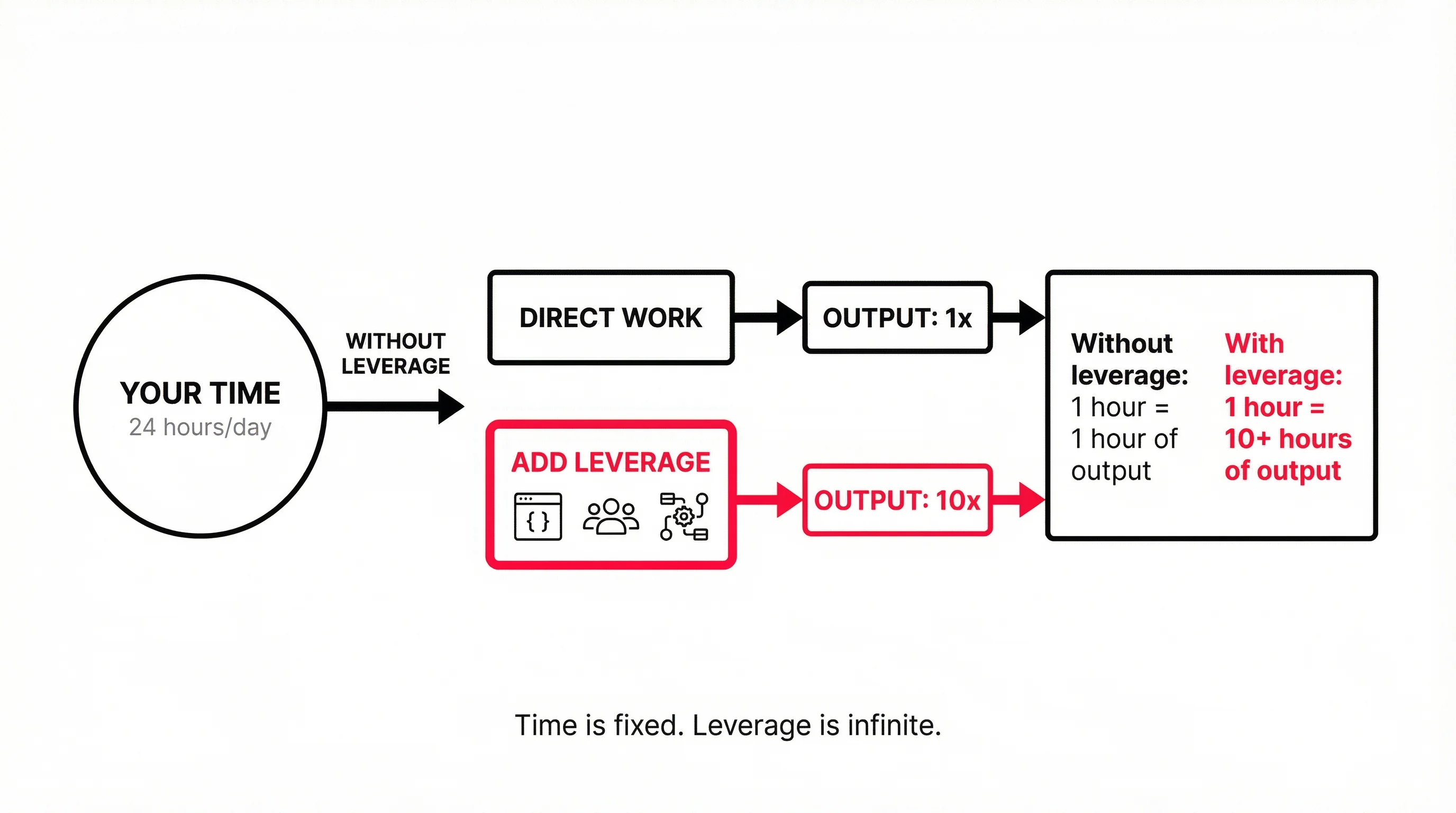
You can't create more time. But you can multiply its impact.
- →Leverage. One hour of work that creates systems produces more than one hour of direct work.
- →Delegation. One hour of training someone creates hours of their work.
- →Automation. One hour of building automation creates infinite hours of execution.
- →Focus. One hour of deep work produces more than four hours of distracted work.
Time multiplication isn't about working more. It's about making each hour count more.
The Audit
Where does your time actually go? Most people have no idea. They feel busy but can't account for their hours.
Try this: Track every hour for one week. Write down what you actually did, not what you planned to do. The results will be uncomfortable.
You'll find hours lost to context switching. Hours lost to meetings that could have been emails. Hours lost to work that didn't matter. Hours lost to things you don't even remember.
The audit reveals the gap between how you think you spend time and how you actually spend it.
The Priority Filter
If time is the only resource, then prioritization is the only skill. Everything else is secondary.
The question isn't "Is this worth doing?" The question is "Is this the best use of this hour?" Because every hour spent on one thing is an hour not spent on everything else.
"Saying yes to one thing means saying no to everything else. Choose wisely."
The Implication
If time is the only resource, then:
- →Anything that saves time is worth more than its cost.
- →Anything that wastes time is more expensive than it appears.
- →The best investment is in time multiplication.
- →The worst mistake is treating time as if it's infinite.
This isn't about hustle culture. It's not about working more hours. It's about recognizing that time is the constraint that matters most—and optimizing for it.
Money can be earned. Reputation can be rebuilt. Skills can be learned. But time? Time only moves in one direction. Spend it wisely.